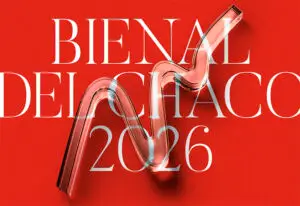
The 2026 ICLAFI Symposium and Annual Meeting will be organized by the Legislative Branch of the Province of Chaco; the Urunday Foundation; ICLAFI; ICOMOS Argentina; the Institute of Culture of the Province of Chaco; the Institute of Tourism of the Province of Chaco; the Faculty of Arts, Design and Cultural Sciences of the National University of the Northeast; and ConTexto Bookstore and Publishing House in Resistencia, Chaco, Argentina, from Thursday to Saturday, 23–25 July, with a heritage tour to the Campo del Cielo meteorite field on Sunday, 26 July 2026. This year’s symposium is taking place simultaneously with a major international sculpture competition, the Bienal del Chaco.
Symposium theme
The 2026 symposium’s theme is “Valuation and Management of Heritage, Art and Public Space: Dialogue between Territory, Institutions and Community”.
In the contemporary context, public space is a central arena for cultural, artistic and social expression. Sculptures, artworks, urban interventions and living cultural practices shape urban landscapes that are part of communities’ everyday life and contribute to the construction of identities, memories and a sense of belonging. However, the recognition of these expressions as cultural heritage is neither automatic nor univocal: it results from processes of social valuation, shaped by diverse perspectives, agreements, tensions and disputes.
Contemporary art and urban interventions, as they become part of the city, interact directly with social uses of space, local memories and diverse expectations. In this sense, the relationship between art and public space cannot be idealized: art can enrich the urban landscape, activate identification processes and strengthen social appropriation, but it can also generate tensions, controversies or deterioration when shared recognition, collective care or adequate management frameworks are lacking.
The objectives of the symposium include the following:
- To analyze heritage-valuation processes linked to art and interventions in public space, considering the active role of communities in recognition, appropriation, protection, conservation and safeguarding of culturally representative expressions.
- To reflect on tensions and balances between artistic creation, social uses of public space and heritage responsibility, identifying both the contributions of art to identity and belonging, and the conflicts or controversies that may arise in the absence of adequate management frameworks.
- To explore legal, administrative and financial frameworks that affect the management of cultural heritage in public space, promoting their understanding from an accessible perspective linked to community practices and concerns.
- To strengthen participation and cultural mediation mechanisms that broaden public awareness and collective appropriation of contemporary cultural heritage, particularly in contexts of high attendance and diverse audiences.
It is hoped that the symposium will be a dialogue lab between art, management and territory, where ICLAFI specialists, academic actors, cultural managers, local governments and communities can jointly reflect on the balances required between artistic creation, public-space use and heritage responsibility. Treating these tensions not as obstacles but as opportunities will help advance toward more inclusive, sustainable and socially legitimized ways of managing contemporary cultural heritage.

Heritage tour
A heritage tour to the Campo del Cielo meteorite field is planned. Located with the provinces of Chaco and Santiago del Estero, the site contains at least 26 craters estimated to be about four to five thousand years old where an iron meteorite fell. The two largest fragments of the meteorite, weighing 30.8 and 28.8 tonnes, are some of the heaviest meteorite masses found on Earth.
The image at the top shows Plaza 25 de Mayo de 1810 in Resistencia, Chaco, Argentina. Photograph by Fernando M. Pascullo (public domain).